
News & events
Upcoming Events
Upcoming events will be posted here when details have been confirmed.
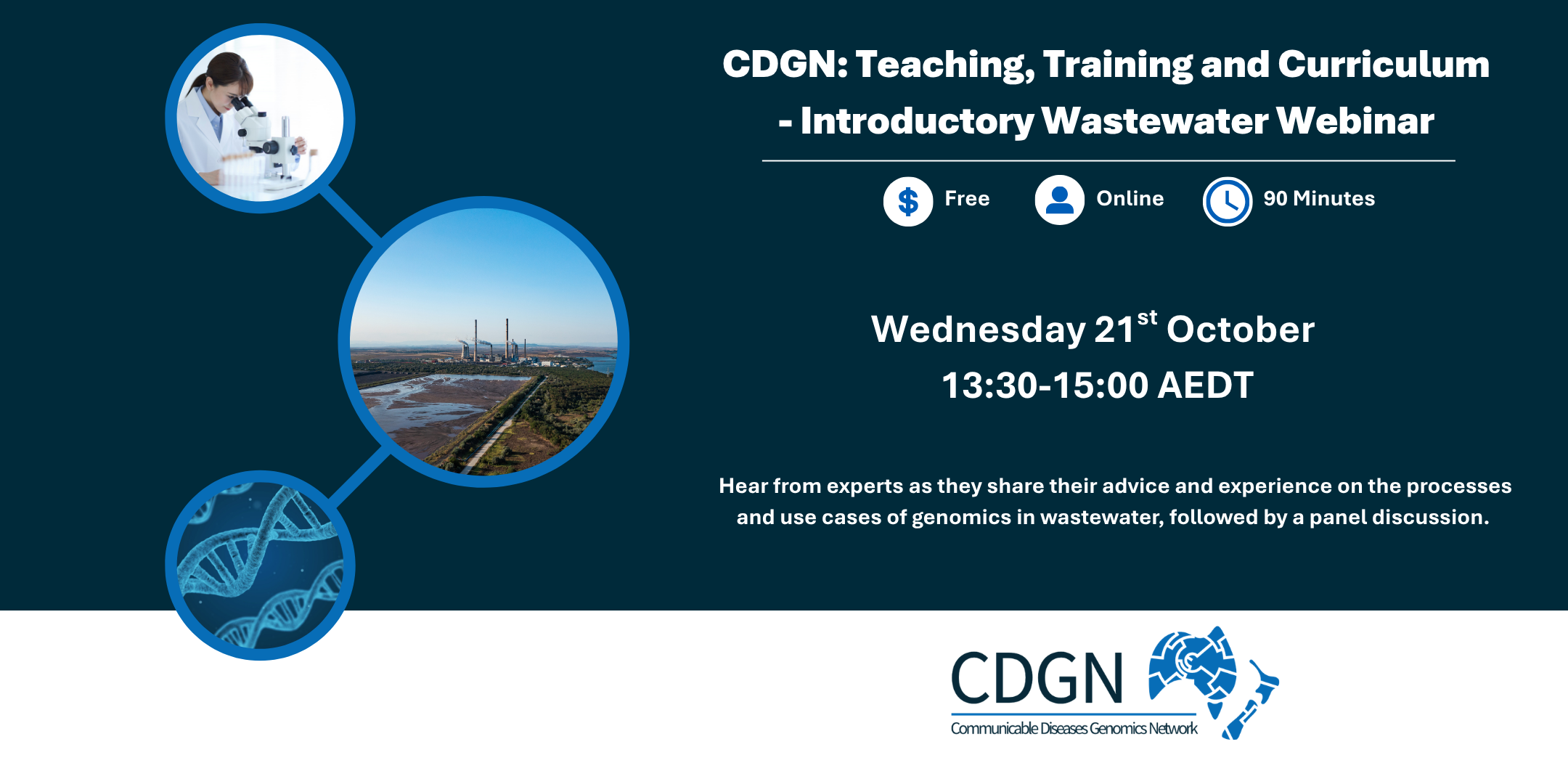
This webinar is the first of a series focusing on genomics in wastewater, run by the CDGN Teaching, Training and Curriculum Working Group.
Past Events
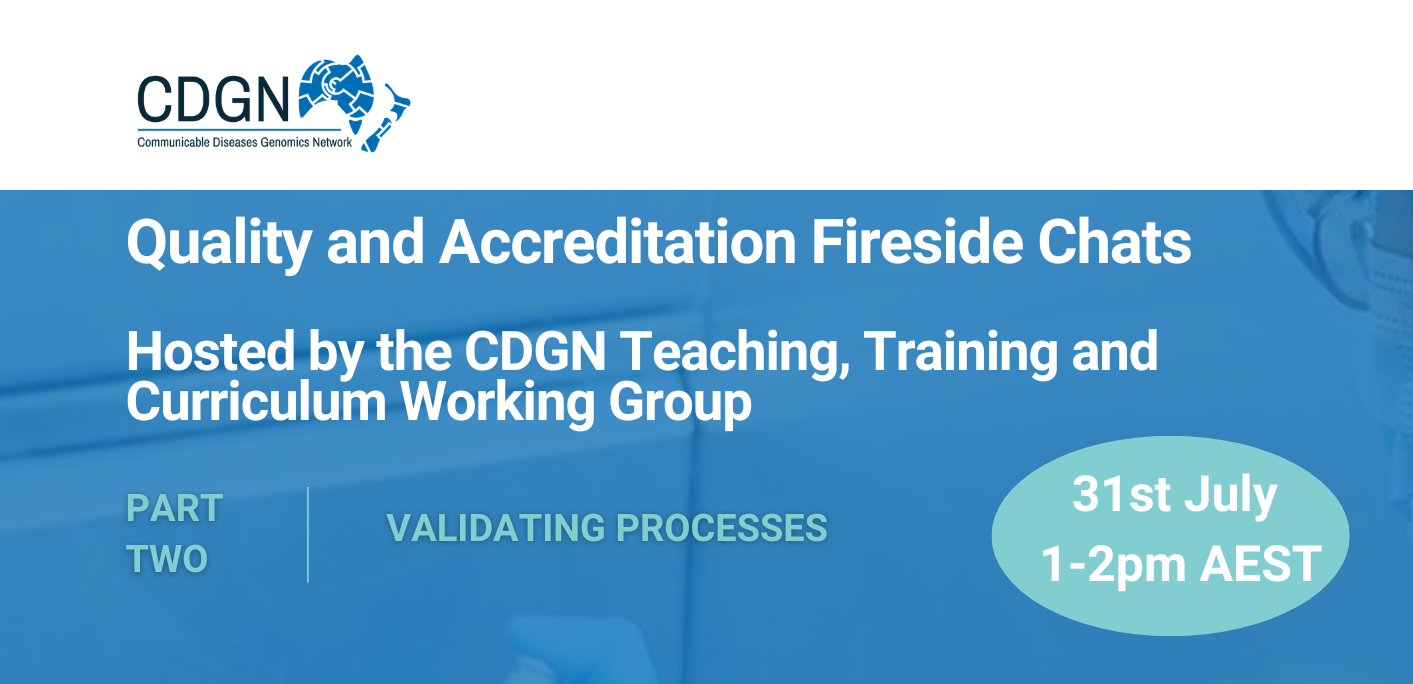
Join us online for Quality and Accreditation Fireside Chats - Part Two, where we dive into validating processes in the wet and dry lab.
Overview: This webinar will focus on the current challenges in choosing and defining metagenomics NGS practice, validating metagenomics NGS, and the role of external quality assessment programs in this process. There will be a Q&A session at the end of the webinar.
Speakers: Adjunct. A/Prof. Leon Caly, Section Head – Translational Diagnostics Laboratory, Victorian Infectious Diseases Reference Laboratory (VIDRL) & Dr Katherine Lau, RCPAQAP Senior Scientist – Biosecurity
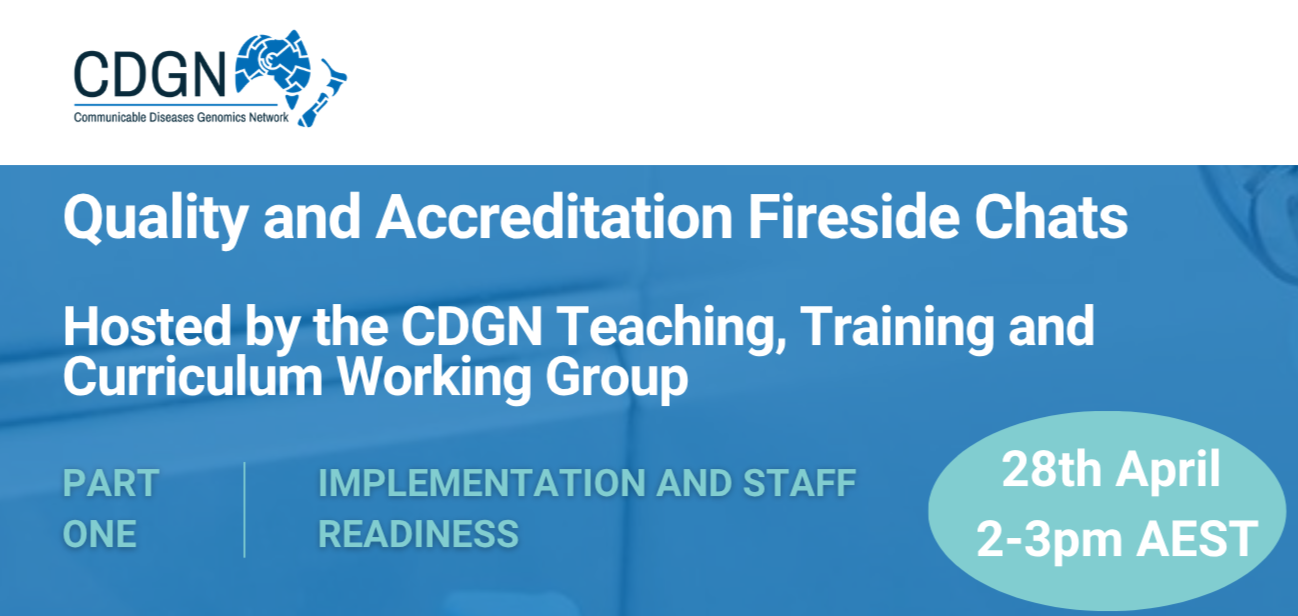
Are you a clinical scientist, medical microbiologist, infectious diseases physician or registrar trainee wanting to ask questions about how to accredit your laboratory in whole genome sequencing, or not sure where to start?
At these three-part fireside chats, hosted by the Communicable Diseases Genomics Network (CDGN) , you will get the chance to ask leading experts about their experience, challenges and expertise in the realm of Quality and Accreditation for whole genome sequencing.
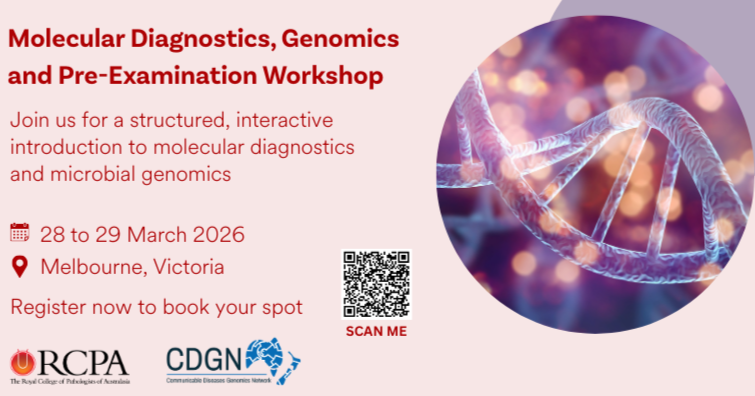
This 2-day face-to-face workshop, jointly delivered by the RCPA and the CDGN, offers a structured, interactive and approachable introduction to molecular diagnostics and microbial genomics for microbiology trainees, Fellows and scientific staff. The program is designed to strengthen confidence, competence and practical readiness by building core molecular knowledge, providing a guided overview of sequencing and genomic applications, and supporting those preparing for RCPA examinations or scientists looking to expand their diagnostic practice.

Predict antimicrobial resistance, master data-sharing, and enhance your expertise in AMR genomics using cutting-edge databases.

The MEEP Lab runs workshops on methods for evolutionary analysis. Our annual Sydney Phylogenetics Workshop is held in July each year and is free to attend. We have also run workshops at other venues, including the National Herbarium of NSW, Australian National University, University of Melbourne, University of New South Wales, and University of Gothenburg (Sweden). Some of our workshops have been offered in conjunction with COMBINE or with the annual conference of the Genetics Society of Australasia.
The 10th Applied Bioinformatics and Public Health Microbiology conference serves as a multidisciplinary forum to demonstrate how advances in microbial and viral genomics, bioinformatics, data science, and sequencing technology are being used to meet the growing needs of public health.
This year’s meeting will focus on the transformative impact of these advances on global public health, featuring sessions that exploring public health genomics, equity in public health, and infection control in healthcare. Attendees can expect to gain insights from a “State of the Union” session, which will provide nationwide perspectives from laboratories and industry.
New methods and algorithms will also be highlighted, with a session dedicated to scaling bioinformatics, focusing on infrastructure and industry. There will also be an opportunity to demonstrate new tools in the popular bioinformatics and data resources showcase. A significant portion of the programme will consist of talks derived from submitted abstracts.
This conference attracts clinical microbiologists and bioinformaticians, and researchers involved in public health, including professionals from reference laboratories and hospital settings.
The conference has been awarded 12 CPD credits by the The Royal College of Pathologists.

Are you a clinical scientist, medical microbiologist, infectious diseases physician, or work in clinical and public health laboratories and want to learn about considerations for quality and accreditation for microbial genomics?
This is the final of a three-part panel discussion series hosted by the Communicable Diseases Genomics Network (CDGN).

Metagenomics is a powerful approach for unraveling the complexity of microbial communities across diverse environments. Its broad applications in ecology, medicine, agriculture, and biotechnology make it an indispensable tool for advancing science and paves the way for groundbreaking discoveries in microbiology and beyond.
By leveraging advanced sequencing technologies and bioinformatics tools, metagenomics enables the analysis of the collective genomes of microorganisms within a given sample.
This webinar provides a valuable platform for researchers, students, and industry professionals to explore metagenomic sequencing, covering an introduction to the concept, beginner-friendly resources, library preparation techniques, various sequencing approaches, workflow considerations, and a high level overview of Illumina data analysis solutions.
Are you considering or currently undertaking the NPAAC Microbial Genomics Certification? Join this panel discussion to hear first-hand experiences from those who have completed the training and assessment pathway.
Are you a clinical scientist, medical microbiologist, infectious diseases physician, or work in clinical and public health laboratories and want to learn about considerations for sequencing viruses?

Are you a clinical scientist, medical microbiologist, infectious diseases physician, or work in clinical and public health laboratories and are wanting to gain expertise in whole genome sequencing?

Are you a clinical scientist, medical microbiologist, infectious diseases physician, or work in clinical and public health laboratories and are wanting to deal with bacterial secually transmitted infections in the future?

Are you a clinical scientist, medical microbiologist or genomic epidemiologist wanting to gain an understanding of the considerations when issuing microbial genomics reports? Epidemiologists at public health units, infectious diseases physicians and other recipients of genomic reports may also find this webinar informative.

Are you a clinical scientist, medical microbiologist or infectious diseases physician wanting to gain an understanding of the application of bioinformatics for pathogen genomics in public health?

Are you a clinical scientist, medical microbiologist or infectious diseases physician wanting to gain expertise in whole genome sequencing?
Microbial Genomics: DNA Sequencing Basics
This Melbourne MicroCert is ideal for health professionals seeking a fundamental understanding of the science behind DNA sequencing, best-practice approaches to generating it, and how it can help address the public health challenges of our times.

Join ACTnet (Australasian Clinical Tuberculosis Network) in learning about the role of Whole Genome Sequencing of M. tb for antimicrobial resistance prediction and transmission surveillance


Are you a clinical scientist, medical microbiologist or genomic epidemiologist wanting to gain an understanding of the considerations when issuing microbial genomics reports? Epidemiologists at public health units, infectious diseases physicians and other recipients of genomic reports may also find this webinar informative.
This beginners tutorial will introduce Galaxy's interface, tool use, histories and workflows.

Are you a clinical scientist, medical microbiologist or infectious diseases physician wanting to gain an understanding of the application of bioinformatics for pathogen genomics in public health?


This webinar is intended for life scientists who are using and building whole genome sequencing mapping and variant calling pipelines. Some familiarity with the concepts of whole genome sequencing is recommended.


Are you a clinical scientist, medical microbiologist or infectious diseases physician wanting to gain expertise in whole genome sequencing?

The Communicable Diseases Immunisation Conference 2022 will focus on communicable disease control issues and immunisation in Aboriginal and Torres Strait Islander populations and other vulnerable groups attracting professionals engaged in infectious disease epidemiology, microbiology and control from laboratory bench, to clinic, from academia to the public policy setting.
Latest News

Embarking on training in microbial genomics can be daunting with so much new terminology. We asked several members of the CDGN Teaching, Training and Curriculum Working Group to prepare some information from their experience and resources they used that can hopefully assist others in their training journey, whether to provide a starting point to wrap your head around what is ahead or whether to guide your discussion with a prospective training lab for example for NPAAC/RCPA microbial genomics certification.

We are also increasingly hearing about new Omicron sub-variants with names such as BA.2, BA.4 and now BA.5. The concern is these sub-variants may lead to people becoming reinfected, leading to another rise in cases.
We are also increasingly hearing about new Omicron sub-variants with names such as BA.2, BA.4 and now BA.5. The concern is these sub-variants may lead to people becoming reinfected, leading to another rise in cases.

University of Melbourne Associate Professor Torsten Seemann has won the World Health Organization (WHO) Western Pacific Innovation Challenge for his work leading the development of AusTrakka, Australia’s national pathogen genomics surveillance platform.
Published in Nature Communications, researchers behind AusTrakka outline how the platform has facilitated rapid data sharing, democratised access to computational and bioinformatic resources and expertise, and achieved national real-time genomic surveillance.